
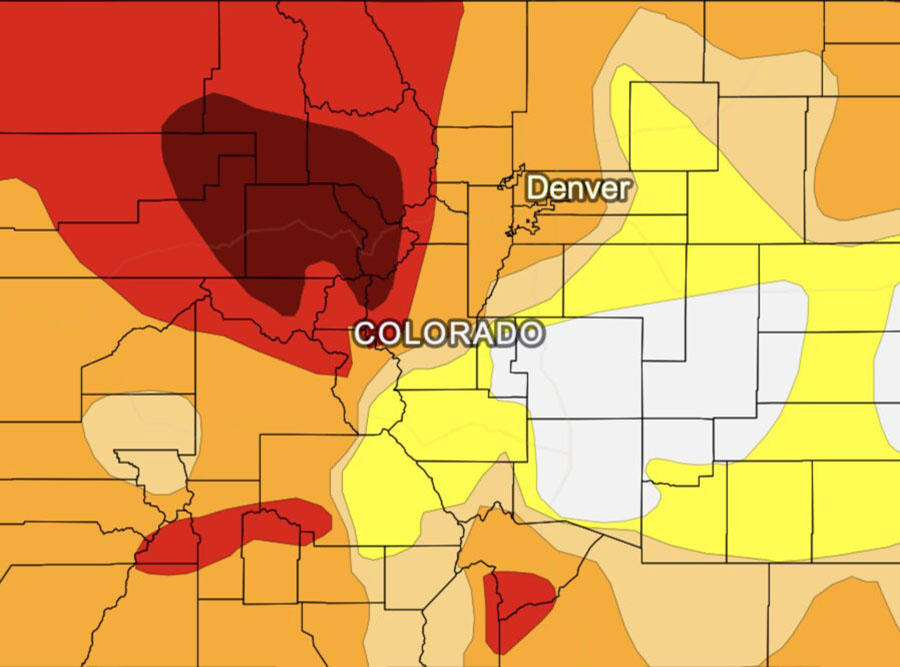
IN COLORADO | Areas affected by drought. (Graphic / NIDIS)
IRRIGATION RESTRICTIONS IMPOSED
Newsroom El Comercio de Colorado
Haga click aquí para leer la versión en español
Colorado is facing one of the warmest and driest years in its recent history, an alarming situation that has forced Governor Jared Polis to take drastic measures to protect the state’s resources. The governor has formally activated the Drought Task Force and elevated the alert to Phase 2 of the State Response Plan, a coordination measure not implemented since 2020.
This decision responds to critical climate data, as the current water year has recorded the hottest start in the 131-year history of the Colorado Climate Center, along with snowpack levels among the lowest in more than four decades. Polis’ primary goal is to coordinate urgent actions among the Departments of Natural Resources, Agriculture, and Homeland Security to mitigate the impact.
74% of Colorado under water stress
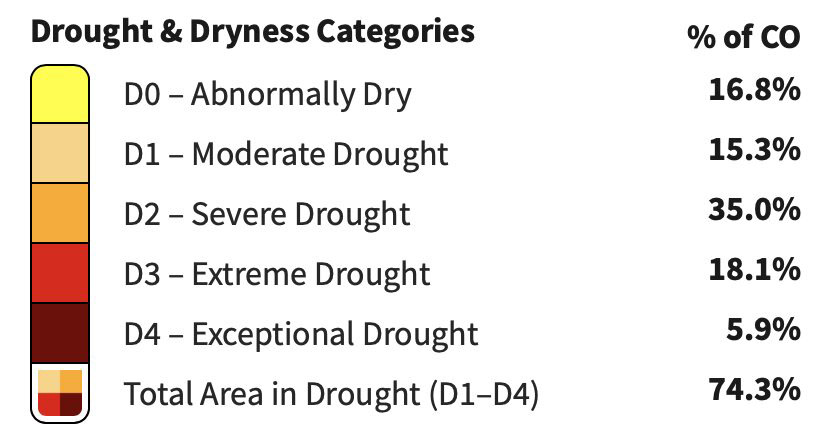
The geographic outlook reflected in the drought map reveals a crisis affecting 74.3% of the state under various levels of water stress. Currently, nearly one-third of Colorado is experiencing severe drought conditions, but the situation is even more critical in the headwaters of the Colorado River, where extreme and exceptional drought levels persist. These areas will face reduced water supply, and agricultural production is expected to be impacted.
Denver takes action
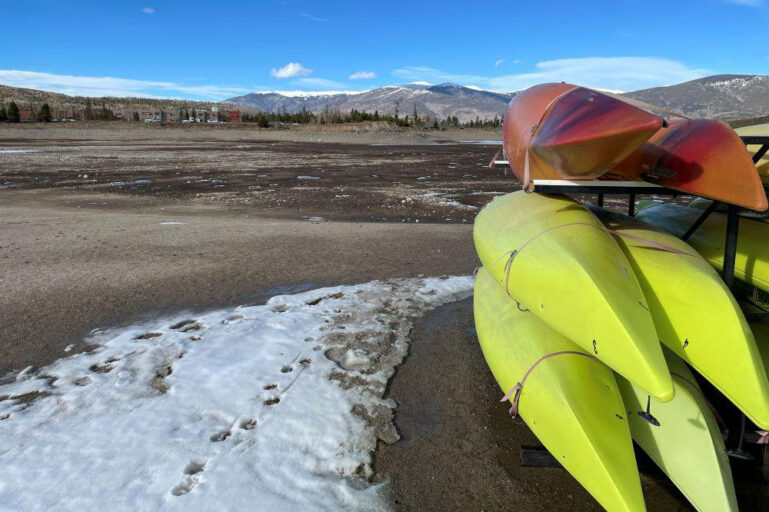
In response to this emergency, the city of Denver has taken the lead in urban restrictions following a Stage 1 drought declaration issued by Denver Water on March 25, 2026. It is the first time since 2013 that the capital has enforced mandatory restrictions, aiming to reduce water consumption by 20% to protect reservoirs such as Dillon, currently at 76% capacity.
Denver authorities now require residents to limit outdoor watering to a maximum of two days per week and strictly prohibit the use of sprinklers between 10 a.m. and 6 p.m. to prevent evaporation. Additional rules have been implemented for businesses, including serving water in restaurants only upon request and imposing fines that can reach up to $500 for those who waste water.
Other cities in the metropolitan area
The crisis extends across the metropolitan area, with different containment strategies depending on local severity. In Douglas County, Highlands Ranch water service has issued a drought watch, urging customers to water manually and responsibly. Meanwhile, the city of Aurora is under monitoring and plans to activate mandatory two-day-per-week restrictions starting April 8, pending city council approval.
Thornton has already implemented Stage 1 restrictions since mid-March, asking residents not to turn on irrigation systems until May.
At a much higher alert level, the town of Erie has declared a Stage 4 supply emergency, completely suspending irrigation in parks and public spaces. Boulder is monitoring the situation and could impose restrictions starting May 1.
You may also like:
Aurora Gains Recognition for Immigrant Integration
Be Careful with Suspicious Links on Social Media
CommonSpirit Listens to the Community




otras noticias
Guest Column – Delivering for Colorado’s Latino Community and All Coloradans
Guest Column – A Boulder Optimist: Restoring Opportunity
Guest Column – Vote NO: Proposition 133 is a dangerous trap