

The opinions, beliefs, and viewpoints expressed by our guest columnists do not necessarily reflect those of this publication.
WE URGE SENATOR HICKENLOOPER TO WORK TO FIX THE 340B PROGRAM: STOP ABUSES, DEMAND TRANSPARENCY, AND PUT PATIENTS FIRST.
By Rudy Gonzales
CEO of Servicios de la Raza, bilingual human‑services nonprofit that expanded into Pueblo to serve Southern Colorado communities facing both ethnic and economic disparities.
Haga click aquí para leer la versión en español
We write to you as Coloradans—community advocates, union members, small business leaders, and patients—who are asking you to continue doing what you’ve always promised: fight for the people. Right now, that means taking bold, principled action to fix the broken 340B Drug Pricing Program and make sure it serves the Colorado patients who need it most.
Senator Hickenlooper, we’re grateful for your leadership on the bipartisan Senate working group tasked with examining 340B. You’ve consistently shown a willingness to listen to communities, push for common-sense reform, and challenge powerful interests. But the job isn’t finished. If we want to make healthcare more affordable and equitable in this state, we must fix what’s gone wrong with 340B.
For low-income and uninsured patients
The program was originally designed to help safety-net providers purchase prescription drugs at steep discounts so they could offer care to low-income and uninsured patients. But somewhere along the way, the system was hijacked. Today, too many hospitals exploit the program to increase profits—charging patients full price for deeply discounted medications and pocketing the difference.
In some cases, they’ve marked up cancer drugs by over 1,000% or billed union health plans 25 times the average price. These practices hurt Colorado families, workers, and small businesses who are already shouldering rising healthcare costs. The primary vehicle hospitals use to extract these profits is through contract pharmacies. Originally intended to help rural or underserved patients get their medications, contract pharmacies have exploded in number—growing more than 2,000 percent since 2010.
How it works
There are now nearly 30,000 of them nationwide. But instead of being located where care is most needed, many are set up in affluent areas, miles away from the communities 340B was created to serve. Here’s how it works: hospitals partner with for-profit pharmacies to dispense 340B drugs. The hospital gets the drug at a steep discount, the pharmacy charges full price to the patient or their insurer, and then the hospital and pharmacy split the profits.
The patient often doesn’t even know they’ve received a 340B drug—and they see none of the savings. This arrangement happens behind closed doors, with little to no reporting or transparency. The result? Hospitals can rake in millions in profits while the people who should benefit continue to struggle to access affordable care. Oversight remains dangerously weak.
There’s no clear definition of who qualifies as a 340B patient. Audits are rare. Violations go largely unpunished. And because there’s no requirement to report how 340B revenue is used, hospitals are under no obligation to demonstrate that these funds are going to support vulnerable populations. Worse still, the program has encouraged consolidation, as hospital systems use the profits from 340B to buy up local, independent clinics.
Patients in Colorado do not deserve abusive drug prices

Acting with urgency
That means less access to care in underserved areas, higher costs, and fewer options for patients who can’t afford to travel for basic services. We know you understand the urgency of this issue, Senator. That’s why we’re urging you to keep fighting. We need reform that ensures the savings from 340B reach the patients—not just the institutions. That means requiring hospitals to pass on the discounts and publicly report how those funds are used to help low-income and uninsured people.
We need serious limits on the contract pharmacy system. These arrangements should only be allowed when they expand access in underserved areas—not when they’re used to pad hospital profits in wealthy zip codes. We also need full transparency on how these partnerships operate, and who’s benefiting from them. We need clearer definitions, stronger oversight, and real accountability.
Protecting the most vulnerable
We need a renewed commitment to the communities that this program was meant to uplift. Colorado’s rural families, union workers, seniors, and struggling parents can’t afford to keep subsidizing a broken system. They deserve a healthcare program that prioritizes them—not hospital executives. Senator Hickenlooper, your voice carries weight in this debate.
We thank you for standing with Colorado patients before—and we urge you to keep fighting now. Fixing 340B is not about politics or partisanship. It’s about people. It’s about fairness. And it’s about making sure the programs we’ve created to protect the most vulnerable are doing exactly that. We’re counting on you to help make this right.
Patients in Colorado do not deserve abusive drug prices
You may also like:
Birds of a feather flock together



otras noticias
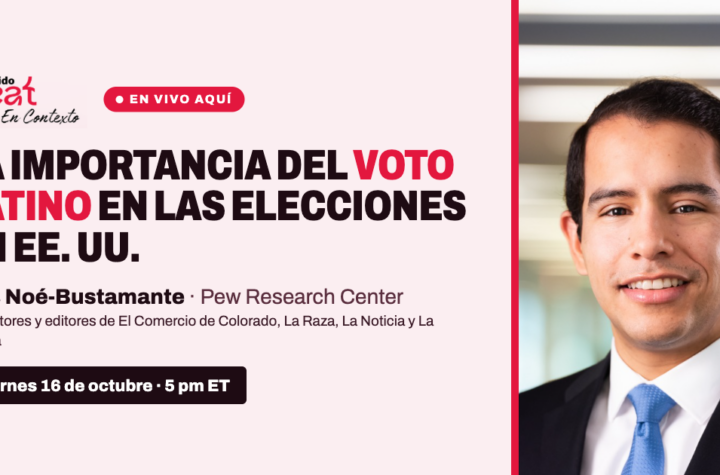
El Comercio de Colorado interviews Pew Research Center expert
Guest Column – Delivering for Colorado’s Latino Community and All Coloradans
Guest Column – A Boulder Optimist: Restoring Opportunity