
Sofia Marquez
El Comercio de Colorado
Haga click aquí para leer la versión en español
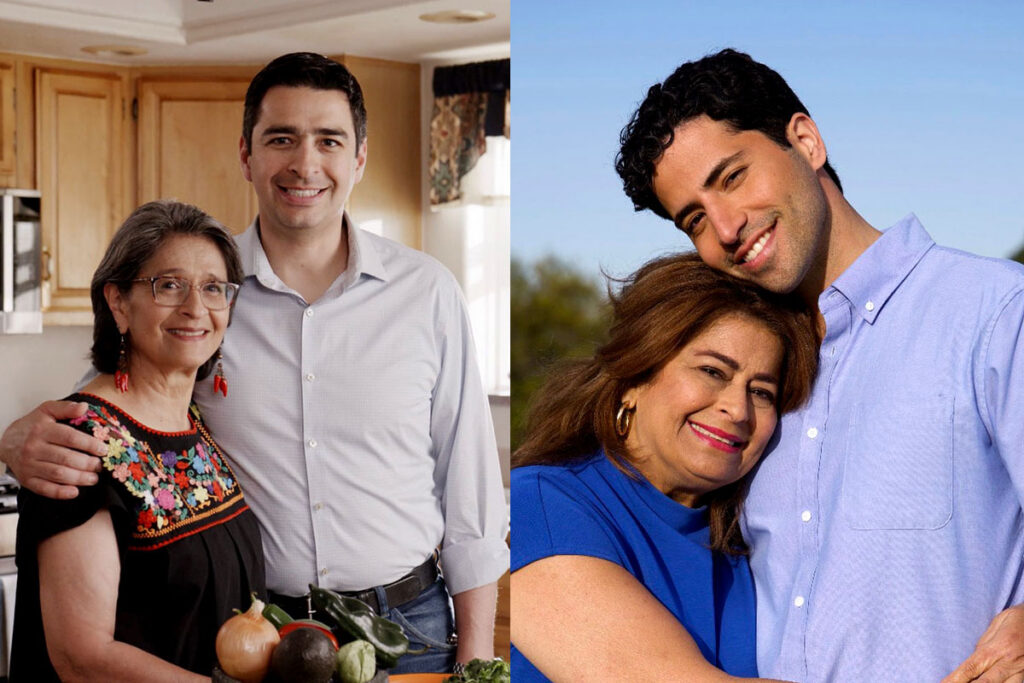
Gabe Evans, the Republican congressman representing Colorado’s 8th Congressional District and seeking reelection in November, has made his mother, Becky Chávez, a symbol of his political messaging. Evans credits her with teaching him the importance of hard work, public service and patriotism. In an opinion column for El Comercio, he recounts how his grandfather emigrated from Chihuahua, Mexico, to El Paso, Texas, served in the U.S. Army during World War II and eventually became a citizen. Evans connects that family history, and the things he learned from his mother, to his own understanding of the American Dream.
Manny Rutinel, Evans’ Democratic opponent, has also made his mother, Irene Carran Miguel, a central figure in his campaign. In his ad “Your Corner,” Rutinel talks about growing up with a single mother who emigrated from the Dominican Republic, worked two jobs and raised her family while they relied on Medicaid. He credits those experiences with shaping his politics today, particularly his commitment to working families and the values his mother raised him with.
Evans focuses more on his family’s history and the opportunities they found in the United States. Rutinel talks about the difficulties his mother faced, and how those experiences informed his political priorities. Both have chosen to put their mothers in their campaigns, which makes sense when you consider how much importance Latino families place on mothers. And how much we expect of them, for that matter.
The Mothers We Know
Evans’ and Rutinel’s mothers are familiar to us. They’re our own mothers, our tías, cousins, or next-door neighbors. Women who worked hard, raised their children and sometimes someone else’s. They cooked every meal, did everyone’s laundry, worked two or three jobs to support their families. And they were expected to do all of that with a smile, to be brave and strong and resilient and whatever else we needed them to be. Nobody asked if they wanted all those responsibilities. They were expected to take them on, so they did. You probably have someone in mind already.
During a conversation with four Hispanic voters in Commerce City, Sandra Vara, a mother of two, connected the candidates’ political aspirations to what they learned at home.
“Whenever they’re out there, they’re representing their home, their family name,” she said. For Vara, the way her children behave outside the home reflects what she’s taught them. Their behavior, good or bad, comes back to the family.
Sonia Alvarado, another Commerce City resident, saw something similar. To her, having both mothers involved in their sons’ campaigns speaks to years of support and personal sacrifice. She also brought up Latino representation, and the importance of having candidates from Latino families seeking to represent a district with a diverse population.
María Subia remembered recognizing Evans’ mother in a television ad. She hardly watches television, she explained, but seeing Becky supporting her son made her happy. Subia talked about raising her own children and how important it had always been to teach them to help other people. She remembered a time when her son helped a friend dealing with legal trouble. When she asked him about it, he reminded her that he was only doing what she’d taught him. Which, I imagine, is the sort of response a mother would be pretty pleased to hear.
Between Matriarchy and Marianismo
In Latino culture, we talk a lot about the matriarch. The grandmother whose opinion ends an argument, or the mother who knows everything going on in the house, including the things nobody told her. And it makes sense if you think about how much our grandmothers have to say about everyone’s business. Which is a lot. We know these women from literature, movies and television too, from Clara in Isabel Allende’s The House of the Spirits to Doña Florinda in El Chavo del 8. Different women, obviously, but recognizable in their own ways.
But calling an entire culture matriarchal is a little harder to support. Researchers use the term matrifocal to describe families centered around the mother, something common in parts of Latin America and the Caribbean. A woman can have a great amount of authority within her family and still have very little power outside of it. Men continue to hold most positions of political and economic authority. Meanwhile, much of what keeps a family running is still considered a woman’s responsibility.
There’s also marianismo, an idea rooted in the Virgin Mary and the expectation that a good mother should be willing to sacrifice pretty much anything for her family. A good mother gives, endures, puts her children first. Or that’s what we expect her to do, anyway. And there’s work involved in being that person. Meals, children, an older relative who needs help. Plus her own job, which doesn’t necessarily mean anyone else has started doing the laundry.
The Political Value of a Mother
Patricia García, who has spent more than a decade working in politics and political campaigns in Weld County, had a different reading of the two mothers’ involvement.
“I have a different take from the rest of you,” she began. “I think using their mothers in their campaigns is a well-thought-out political idea and strategy.”
She wasn’t necessarily disagreeing with the other women. In fact, much of what they’d said resonated with her. But García has also spent enough time around political campaigns to recognize a strategy when she sees one.
“Everything you’re saying resonates with me, and I feel that it’s true. And that’s why they want to bring their mothers in to communicate the message of their candidacy,” she explained.
Evans and Rutinel may genuinely credit their mothers with much of who they are today. Their mothers may sincerely believe in their sons’ candidacies, too. None of that is particularly difficult to believe. But political campaigns decide which parts of a candidate’s personal life make it into an ad, a speech, or an opinion column. There are things that would sound a little ridiculous coming directly from a candidate. Imagine someone getting on television and telling voters he’s honest, hardworking and was raised with good values. I mean, they do that already, but having your mother tell that story, or even just appear in it, is a different approach.
A mother’s support can’t tell us how a candidate will govern, or how much her presence in a campaign influences someone’s vote. Evans and Rutinel talk about their mothers as the people who taught them their values, and now those principles and experiences are a pivotal part of the candidates’ approved messaging.
You may also like:
Governor Polis Appoints María González to Fill Manny Rutinel’s Vacancy




otras noticias
Latino voters in Colorado Springs demand immigration reform
Denver Film Festival to honor John Leguizamo
El Comercio de Colorado interviews Pew Research Center expert