
Screenshot
The opinions, beliefs, and points of view expressed by our guest columnists do not reflect the opinions, beliefs, and points of view of this publication.
A pathway for the people’s mandate, measured against the best democracies in the world, from a daughter of Puerto Rico
Irene Vilar
On Saturday morning, nearly two weeks after the polls closed, Mary Peltola, a Yup’ik woman from Bethel, declared victory in Alaska’s Senate race. If her lead survives the ranked-choice tabulation that begins this week, she will be the first Indigenous Alaskan ever to sit in the United States Senate and the fifty-sixth vote of a Democratic caucus that has grown by nine seats since election morning.
The new face of this Senate will comprise the second-largest majority either party has held in three decades. Peltola joins a cohort that already includes Keisha Lance Bottoms, who became the first Black woman elected governor of any American state by defeating a billionaire who spent more than two hundred million dollars of his own fortune to stop her.
Peltola will also join James Talarico, the former middle school teacher who took a Texas Senate seat no Democrat had won since before he was born, and she will join Abdul El-Sayed, a physician and the son of Egyptian immigrants, who won a Senate seat in Michigan. In my own city, Melat Kiros, a democratic socialist who unseated a fifteen-term incumbent to represent Denver in the House, will be walking the halls of Congress with Peltola.
The question everyone is asking now is what this majority will do with what it has been given. Can a party that spent a generation hedging, polling, and apologizing for its own convictions recover the boldness it once had? There was a time when the democratic political ecosystem understood that a commitment to justice begins with the foundational guarantee that every person in this country, by the fact of having been born, has a right to clean water, to a doctor, to a school, and to the food and shelter and air that safeguard the viability of human life.
The world agreed to this long ago when the Universal Declaration of Human Rights named health, housing, food, and education as rights in 1948. In 2010, the United Nations added water, and every healthy democracy on earth has since built its institutions around that promise. An urgent question now for the Democratic Party is whether it dares to stop treating basic human needs as privileges rationed by income and class, and if it can govern, at last, as if the promise were true.
I answer from the arc of my own life. I am a Puerto Rican immigrant who studied political science and religion at Syracuse University, became an author, a publisher, and the founder of a twenty-year-old nonprofit. My answer is informed by the teachings of motherhood and three decades of justice work.
A week ago in these pages, in “Love Thy Neighbor, at Scale,” I wrote that James Talarico’s victory speech was a sermon, and that his faith, in which every person bears the image of the sacred, is the liberation theology I was raised on in Puerto Rico. Today I want to elaborate on what it would look like when “love thy neighbor” governs, and how we will know whether it is working. What will it take for this democratic majority to deliver on the mandate it has been given?
What the people actually said
Before any pathway, there is the mandate. The most diverse coalition in American history, Puerto Rican and Mexican and Dominican and Salvadoran, Ethiopian and Egyptian and Yup’ik, Black and white, Christian and Muslim and Jewish and unchurched, voted for a government that answers to its people rather than to Elon Musk. It voted for decency and fairness and the plain right to live in dignity, and it did so in places that were supposed to be beyond reach.
Texans who had voted for Trump three times voted for a man who told them the real fight was top against bottom. Georgians who had never elected a woman to anything higher than the state legislature elected a Black woman governor. Alaskans who had sent Republicans to the Senate for a generation sent a grandmother from the Kuskokwim delta instead.
This is the first thing the new majority has to understand. The United States is a plural society and that plurality is the whole source of this country’s vitality. Any pathway that does not begin from that recognition will fail.
Measuring ourselves against the best
I was trained as a political scientist. Though my approach to the social sciences is story-driven, I was taught to measure. Let’s look at data points and set the United States beside the social democracies it has spent seventy years dismissing as quaint. For example, Denmark, a nation of six million people with roughly the same income per person as ours. I believe the comparison tells us what this system has chosen to do with its wealth and what must change.
Start with the human body. The United States spends more on health care than any nation that has ever existed, about thirteen and a half thousand dollars per person each year (seventeen percent of everything the country produces), while Denmark spends a little over seven thousand dollars per person ( nine percent of its economy), and covers every single one of its citizens from cradle to the grave.
What do we do with that extra six thousand dollars a head? We buy a shorter life. An American born today can expect to live about seventy-six and a half years, four years fewer than the average across the wealthy democracies and more than five years fewer than a Dane. These numbers place the United States thirty-second out of thirty-eight OECD nations, between Colombia and Estonia.
We lose more than five of every thousand babies before their first birthday, nearly twice Denmark’s rate, and we lose seventeen mothers for every hundred thousand births where Denmark loses four. Now, because the money that was supposed to buy health has been diverted into insurance companies, hospital chains and pharmaceutical margins, roughly a hundred million Americans (four in ten adults) are carrying medical debt (close to two hundred and twenty billion dollars), most of it owed by people who had insurance on the day they got sick. There is no such thing as medical debt in Denmark.
Now the child. UNICEF’s most recent accounting of child poverty in the rich world puts the American rate at twenty-six percent, more than double Denmark’s ten. The difference is what each nation decided to pay for. The Nordic countries spend about one and a half percent of their economies on child care and early education, more than three times the American share.
A Danish mother returns to work knowing her toddler is in a well-staffed, publicly funded center that costs her a fraction of what an American family pays, if an American family can find one at all. When that child reaches eighteen, she will attend university without tuition, as in a dozen European countries, and the Danish state will pay her a monthly stipend of roughly a thousand dollars to study.
The public policy rationale is anchored in Denmark’s well-researched understanding that an educated citizen is a public good that advances the overall health of the country. Her American cousin, meanwhile, will join the forty-odd million people who together owe more than one point seven trillion dollars in student loans. It’s heartbreaking to realize that this very fact determines, more than talent or will, who in this country may become a doctor or a teacher or an artist.
Now the spirit, which is harder to count but has been counted.
The World Happiness Report, which asks people in nearly a hundred and fifty countries to rate their own lives, placed Finland first for the ninth year running in 2026, with Iceland, Denmark and Sweden close behind. The report placed the United States twenty-third, below the United Arab Emirates and Saudi Arabia (this ranking has fallen or stalled every year since 2011). The researchers have determined that what separates the top from the middle are social support, trust in institutions, freedom to make one’s own choices, generosity, and the absence of corruption.
All this to say that the social determinants of health that a government either builds or neglects shape the emotional and physical well-being of a nation. The US own Surgeon General, Dr. Vivek H. Murthy, named the neglect for what it is in May 2023, in an eighty-two-page advisory titled Our Epidemic of Loneliness and Isolation, which found that about half of American adults report feeling lonely.
The young are hit the most, with the time they spend with friends in person falling by nearly seventy percent between 2003 and 2020. The report established that social isolation raises the risk of premature death by twenty-nine percent (a danger the report compares to smoking up to fifteen cigarettes a day). The same advisory put the cost of isolation among older Americans at six point seven billion dollars a year in excess Medicare spending.
It is no coincidence that the countries at the top of the happiness rankings are the ones that fund their libraries, their parks, their folk high schools and their orchestras as public services, at half a percent to a full percent of their national product (eg France, Germany and Sweden) while we leave culture to struggling nonprofits, billionaires’ foundations, and the “free” market.
Now the ballot.
Transparency International’s latest Corruption Perceptions Index placed Denmark first in the world with a score of ninety out of a hundred, and placed the United States at the lowest score it has ever recorded. In Denmark, the idea that a corporation might fund a parliamentary campaign is foreign. In the US, it is the business model. In Denmark, roughly a fifth of the nation’s wind power is owned by cooperatives of farmers and neighbors who bought shares in the turbines on their own hills.
This is a tradition that reaches back through the agricultural cooperatives of the nineteenth century to a Lutheran pastor named Grundtvig who believed that a free people must first be an educated and self-governing one. Here, on the other hand, energy and water are commodities sold by investor-owned utilities to those who can pay.
In Puerto Rico, where the grid was privatized after hurracaine María, we are watching what that philosophy does to further cripple an island suffocating in the stray jacket of colonialism and at the frontlines of climate change. I could go on, with union membership at eleven percent here and above sixty in the Nordics, and with food insecurity touching one in eight American households in the richest nation in history.
Today we are facing a system engineered to serve those who already have money, and to exclude everyone else from clean water, clean energy, healthy food, a doctor, higher education, and a reason to believe that tomorrow will be better than today. This can only be repaired by design.
The pathway
What follows are the commitments I would ask of a government that intends to honor this midterm election mandate. Each one is anchored in something I have lived or published, and measurable against the nations that have already done it.The first commitment, without which none of the others survives, is to get the money out of politics. Corporate money has no place in federal elections and corporate lobbying has no place in the Capitol.
A majority of fifty-six senators can pass public financing of campaigns while a movement of the size that just elected them can pass the constitutional amendment that ends this corruption of the democratic process, once and for all. Talarico said it on election night when he called every billionaire’s attack ad the howl of a dying establishment.
The second is to make health care, education, water, and energy rights rather than privileges. Every other wealthy democracy achieved this long ago, and the numbers above show we can afford it, since we are already paying Nordic prices for American outcomes. A single-payer system that covers everyone, free public university with a living stipend on the Danish model, universal childcare funded at the Nordic share of the economy, and water and power held in public or cooperative hands, as Denmark holds its wind, would end the obscenity of a hundred million people in debt for having been ill.
The third is to treat loneliness as the public health emergency the Surgeon General says it is, and to understand, as Hannah Arendt understood after watching Europe fall, that lonely people cut off from the tangible world and from one another are the soil in which authoritarianism grows. The cure is the tangible world itself, the parks and libraries and community centers and youth programs and theaters where people meet in the flesh.
This government should fund the arts and culture as the social determinants of health they are, and create a federal office whose only job is to rebuild the connective tissue of American life, from our neighborhood block to the county. The fourth is to put parents and children at the center of the state. Lloyd deMause, the founder of psychohistory whose work I have carried with me for thirty years, argued that the slow evolution of how we raise our children is the hidden engine of all history, and that love is its central force.
We are now in a race between parenting that improves too slowly and a destructive technology that improves too fast. He proposed parenting centers with home-visiting programs, which have been shown to reduce child abuse, as the most powerful investment a nation can make. I would add to them paid family leave, which every Nordic parent takes for granted, and a school curriculum in which civics, emotional intelligence, and the skills of raising a child are taught with the same seriousness as mathematics.
A government that protects the most fragile first ( the elders, the veterans, the young, and the parents raising them) will find that it has protected everyone. The fifth is to return public technologies to public hands. Artificial intelligence is being built by a handful of men who answer to no electorate. When one of them owns the rockets, the satellites, the social network, the chatbot, and the data, and uses all of it to bend elections, what he owns is a private state. That is awfully dangerous.
The country has faced this before, with the railroads and the electric grid and the telephone. The remedy it found is the one it needs now. The public infrastructure of this technology, the foundation models trained on the whole of human knowledge, belongs under public ownership or public trust. The monopolies that control it should be broken up, and the rest should be regulated as fiercely as we once regulated the nuclear bomb. Musk’s empire must be the first case because it is the clearest proof of the abyss we are currently staring at.
The sixth follows from the fifth. Maine passed the first statewide moratorium on large data centers this spring. New York paused new permits in July. Fourteen states and more than a hundred localities have considered the same, and Bernie Sanders and Alexandria Ocasio-Cortez have introduced a federal bill to halt large AI data centers until Congress passes comprehensive AI law. These facilities drink the water and burn the power of the neighborhoods they are built beside.
In our own Aurora, Colorado, they are rising next to the children whose asthma I have written about in these pages. Policy makers must go further and require of the entire AI ecosystem what we require of a highway before construction, such as impact assessments that count the human being as part of the environment under threat. The seventh is climate, and it is a lens through which every other commitment must be designed.
There is no sovereignty and no health care and no housing and no peace on a planet we have rendered uninhabitable. My Puerto Rico, which contributes almost nothing to the warming and sits on the front line of the storms corridor, already knows what denial costs. A regenerative economy, climate literacy in every classroom, and an America that leads the global effort are the conditions of everything else.
The eighth is to re-empower the United Nations and to recover the humanitarian leadership this country once exercised in the world. That leadership was imperfect, and it was often exercised for the wrong reasons, but it stood in the name of principles worth standing for: the end of hunger, the prevention of war, the health of peoples.
Trump threw every one of them away. This is a moment in our history to summon King’s belief that we are all responsible for all. A government that agrees with the leader of the civil rights movement would fund the United Nations, rejoin what we abandoned, and lead once more in goodwill.
From that follows the ninth commitment. We must rebuild public research and public universities as the engines of the common good they were when they cured polio and sent people to the moon, so that an American education becomes once again a gift this country gives its children and the world.
The tenth is a democracy that works for all of us, which means statehood for Washington, voting rights restored, the filibuster ended, the courts reformed, and a federal commitment to the kind of public participation I have spent years building and advocating for, with language access and compensation and childcare and traceable answers, so that a comment from a resident in oil and gas ridden Dacono, Colorado carries the same weight in a rulemaking as a memo from a lobbyist. And the eleventh is Puerto Rico, which I leave for last because it is the one by which I
judge all the rest.
The colony in the house of the free
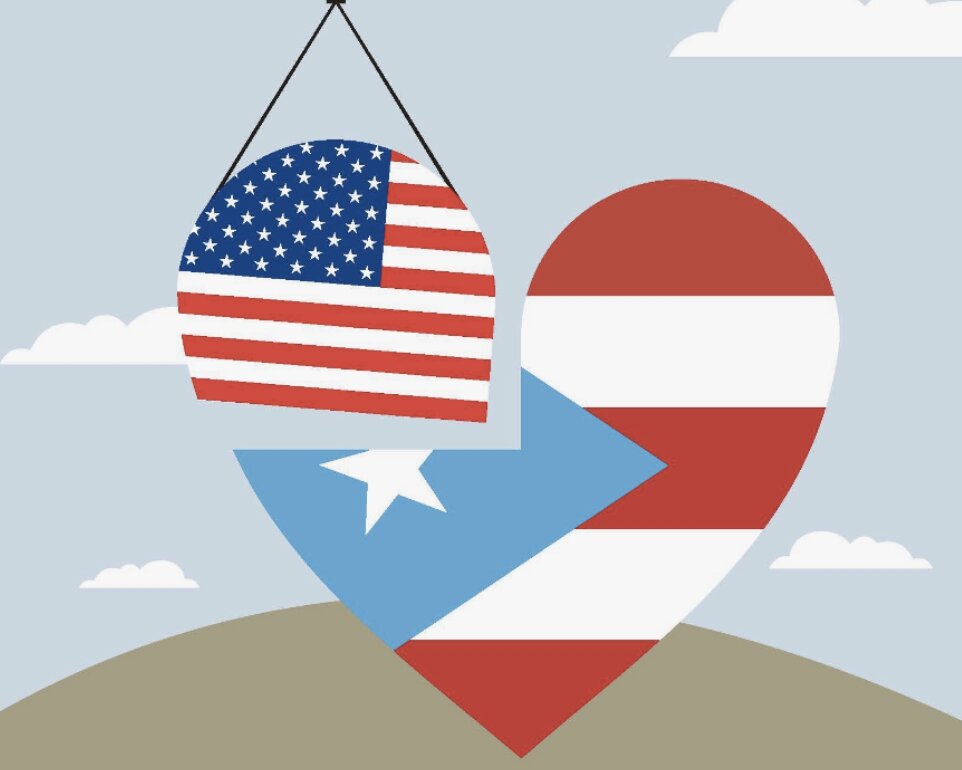
My grandmother spent twenty-five years of her life in prison to call attention to Puerto Rico’s colonial existence. The facts have never contradicted her. The United Nations struck my island from its list of non-self-governing territories in 1953 on the strength of a commonwealth arrangement that the Supreme Court has since confirmed left Congress with absolute power over four million American citizens. These so called citizens cannot vote for the US president yet are sent to fight US wars.
Every June for more than four decades, the UN Special Committee on Decolonization has adopted a resolution reaffirming Puerto Rico’s inalienable right to self-determination and independence. This year, after hearing more than seventy petitioners, Congress has ignored every one of them. A government elected by the most diverse coalition in American history cannot go on preaching democracy abroad and freedom at home while it holds a colony in the Caribbean.
I would ask three things of this new Congress. It should acknowledge in law that the relationship imposed in 1898 and dressed in new clothes in 1952 is colonial, unjust, and illegal under the international order the United States itself helped write. It should ask the United Nations to return Puerto Rico to its list. It should convene a binding process of self-determination with independence and free association on the ballot as real options and the island’s own people as its authors.
It should endow that future, because when other colonies were decolonized their former rulers were obliged, however grudgingly, to leave something behind. Puerto Rico is owed a sovereign fund that accounts for a century of extraction, for the Jones Act, for the sterilization of a third of its women, for Vieques, for the pharmaceutical and military Superfund sites that poisoned the ground of the town where I was born, for the debt that was imposed on it, and for the ecocide that must be healed before any nation can stand on that land.
We are more than ready for her
There is one more question everyone is asking, and it is whether this country is ready for a woman president. The honest answer is that the country has not only become ready but has already begun. Georgia has just elected a Black woman governor over two hundred million dollars of a billionaire’s money, Alaska is about to send a Yup’ik grandmother to the Senate; Texas elected a woman governor and Georgia a woman attorney general.
Alexandria Ocasio-Cortez is a Boricua from the Bronx whose mother was born in Puerto Rico. This extraordinary leader has cleaned houses, tended a bar to help her family keep its home, and defeated a rigid political machine at twenty-eight. AOC has now spent eight years in Congress explaining, with a precision the old democrat guard has never managed, exactly who is picking our pockets and how.
She has the mind to walk a shop floor and a Senate hearing through a carbon market and a data center’s water bill in the same afternoon. She has a compassionate heart, and she has the spirit of a Catholic faith that is as much a part of her public language as Talarico’s Presbyterianism is of his. She has the conscience, the thing Lloyd deMause would call the real self and my Episcopalian uncles would call the soul, that makes people trust her even when they disagree with her.
She is also a co-author of the data center moratorium that this pathway asks the new Congress to pass. This country has always had a love story with justice, and the story has always been told by people who could move mountains because their charisma was rooted in goodwill. Lincoln and Frederick Douglass, Jane Addams and Eleanor Roosevelt, Fannie Lou Hamer, César Chávez and Dolores Huerta, King, Shirley Chisholm running before anyone was ready and calling herself unbought and unbossed, Barack Obama, whom the country was supposedly not ready for either.
That is the tradition Ocasio-Cortez belongs to and the tradition this election vindicated by reasserting the values of decency, fairness, dignity, and a government that answers to its people, not private interests. I will end where I began. The diverse and ecumenical face of this midterm election is proof that the people that make up this United States of America remains the country that keeps fighting for the best of us in us, for the kindness and the stubborn decency and the refusal to let a neighbor go hungry.
The measurements the political scientist in me set down here are not an indictment of this country but a map of how far it has been dragged from itself and how far it now has permission to travel back.


otras noticias
Gabe Evans busca recuperar escaño republicano en Congreso federal
Pettersen impulsa ley de licencia por cuidados intensivos neonatales
EEUU perdió estatus de país libre de sarampión